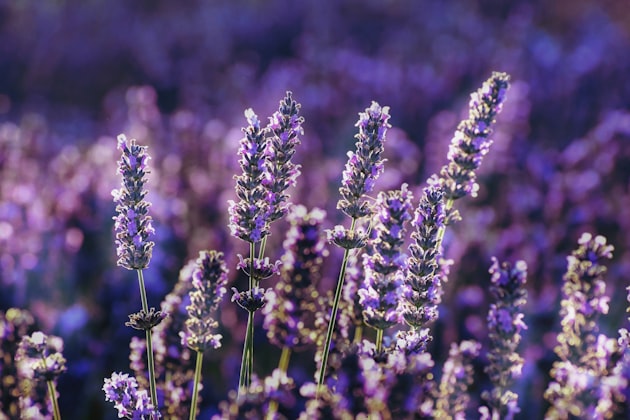
Spike Lavender
Lavandula latifolia
Extracted by steam distillation from the flowering tops of Lavandula latifolia Medik. (lavender spica, lavender wild, aspic), shrub of the Lamiaceae widespread in the areas mediterranee aride and calcaree among 0 and 800 m — ad altitudini more low compared to the lavender officinal (L. angustifolia) — dto the Iberia to the Centro Italy and to the Maghreb. The lavender spica is botanicaly distinta from the lavender angustifolia and dto the hybrid lavandino (L. × intermedia): has flowers more corti, branches more larghi and a fragrance more canforato and penetrating. The phytochemical profile is dominated by 1,8-cineole (25-35%), linalool (25-40%) and camphor (10-20%) — a composition tripartita which unisce the antiseptic properties of the cineole, quelle ansiolitic of the linalool and quelle analgesic-rubefacent of the camphor. In aromatherapy is the oil of lavender more recommended for the wounds, stings of insects and muscle pain (thanks to the camphor), mentre the lavender angustifolia is preferita for the usi sedative. Contraindicated during pregnancy and children small. Top-to-heart note balsamic, frescomentolata and robusta.
Mediterranean basin western (Spain, Portugal, France southern).
Flowering tops and leaves
Steam distillation
4 drops of Lavender spica + 3 drops of Eucalyptus + 2 drops of Mint peppermint in the diffuser. L'high content of 1,8-cineole of the lavender spica the makes effective for decongestionare the respiratory tract.
5 drops of Lavender spica + 3 drops of Rosemary + 2 drops of Camphor in 30 ml of arnica oil. Massage onto muscles tesi and dolorant. The camphor natural of the lavender spica amplifies the analgesic effect.
Blends well with: